Delivering Authenticity
Delivering Authenticity
Deliver to
Set location
Delivering Authenticity
Delivering Authenticity
Deliver to
Set location
Tap to select delivery location
GI CERTIFIED
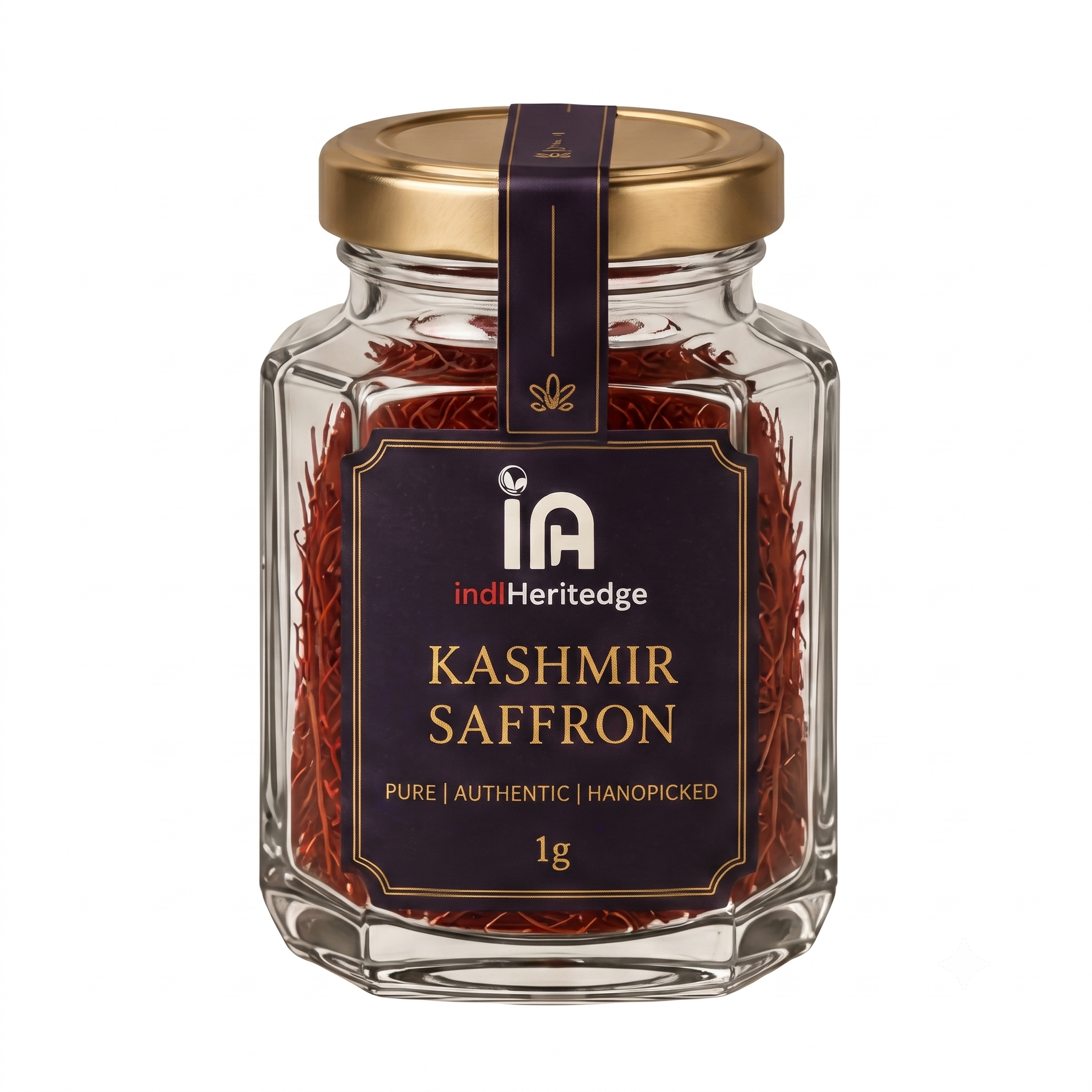
Kashmir Saffron is a premium saffron spice cultivated in the temperate high-altitude regions of Jammu & Kashmir. Produced from Crocus sativus L., it is distinguished by its characteristic colour, aroma and flavour and is traditionally cultivated and processed across the saffron-growing areas of the Kashmir Valley.
Overview
Kashmir Saffron, scientifically known as Crocus sativus L., is cultivated at elevations of approximately 1,500–2,400 metres above sea level in the temperate regions of Jammu & Kashmir. The spice is valued for its crocin, safranal and picrocrocin content, which contribute to its colour, aroma and characteristic taste.
Historical Background
Kashmir has a long saffron-growing heritage. The provided profile records references to saffron in the Nilamatapurana, Rajatarangini, Ain-i-Akbari and Tuzuk-i-Jehangiri. Traditional accounts also associate the introduction of saffron to Kashmir with Sufi ascetics, although these are presented as cultural traditions and legends.
What Makes It Unique
Kashmir Saffron is characterized by its high-altitude cultivation, temperate climate and distinctive biochemical profile. The profile highlights crocin, safranal and picrocrocin as important quality parameters. Traditional processing, particularly the preparation of the Mongra grade, is also identified as a distinctive feature of Kashmir saffron.
Production Process
Cultivation begins with preparation of well-drained soil and selection of healthy saffron corms. Corms are generally planted in August, followed by crop management during the growing cycle. Flowers are harvested during October–November, usually in the early morning. The stigmas are manually separated from the flowers and dried before grading. Traditional grades include Lachha, Mongra and Guchhi.
Geographical Region
The GI profile identifies four principal saffron-producing districts: Pulwama, Budgam, Srinagar and Kishtwar. Pulwama accounts for the largest share of the documented cultivation area, followed by Budgam, Srinagar and Kishtwar. The principal cultivation landscape includes the Kashmir Valley's karewas, or elevated lacustrine terraces. Pampore is identified as a major heritage centre of saffron cultivation.
Benefits & Uses
The profile identifies saffron as a source of carotenoids, volatile compounds, minerals and vitamins, with crocin, safranal and picrocrocin contributing to its characteristic properties. It also describes antioxidant capacity and traditional medicinal use. For an e-commerce page, these should preferably be presented as nutritional and traditionally documented properties, rather than medical-treatment claims.
Cultural Significance
Saffron is deeply connected with Kashmiri culinary and cultural traditions. It is used in traditional Kashmiri cuisine and Wazwaan, is an important ingredient in Kehwa, and has associations with religious ceremonies and offerings. The cultivation and processing knowledge is traditionally passed through generations of farming families.
Shop Kashmir Saffron
1 GI-certified product
Geographical Indication
Reg. 366 · Govt. of India certified