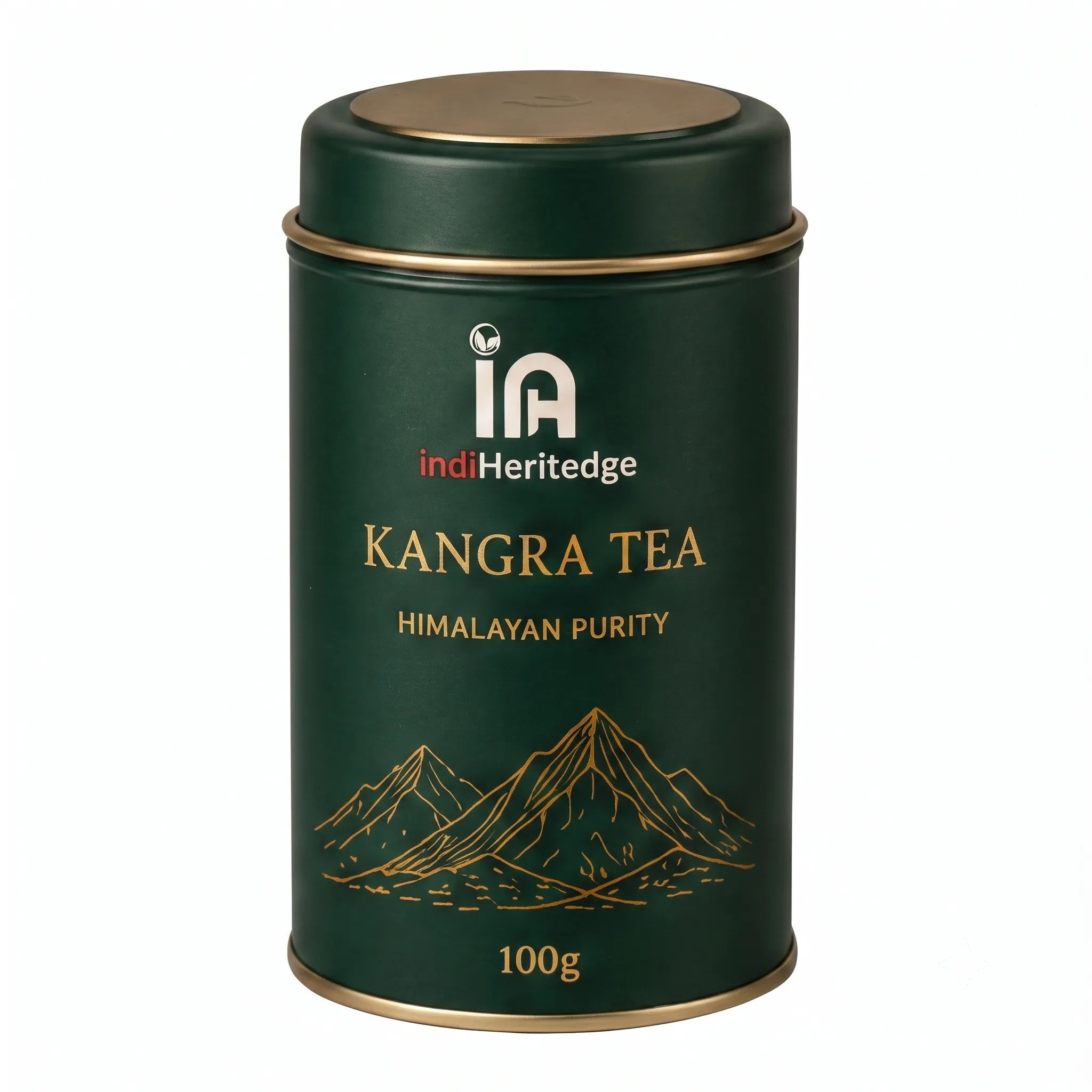
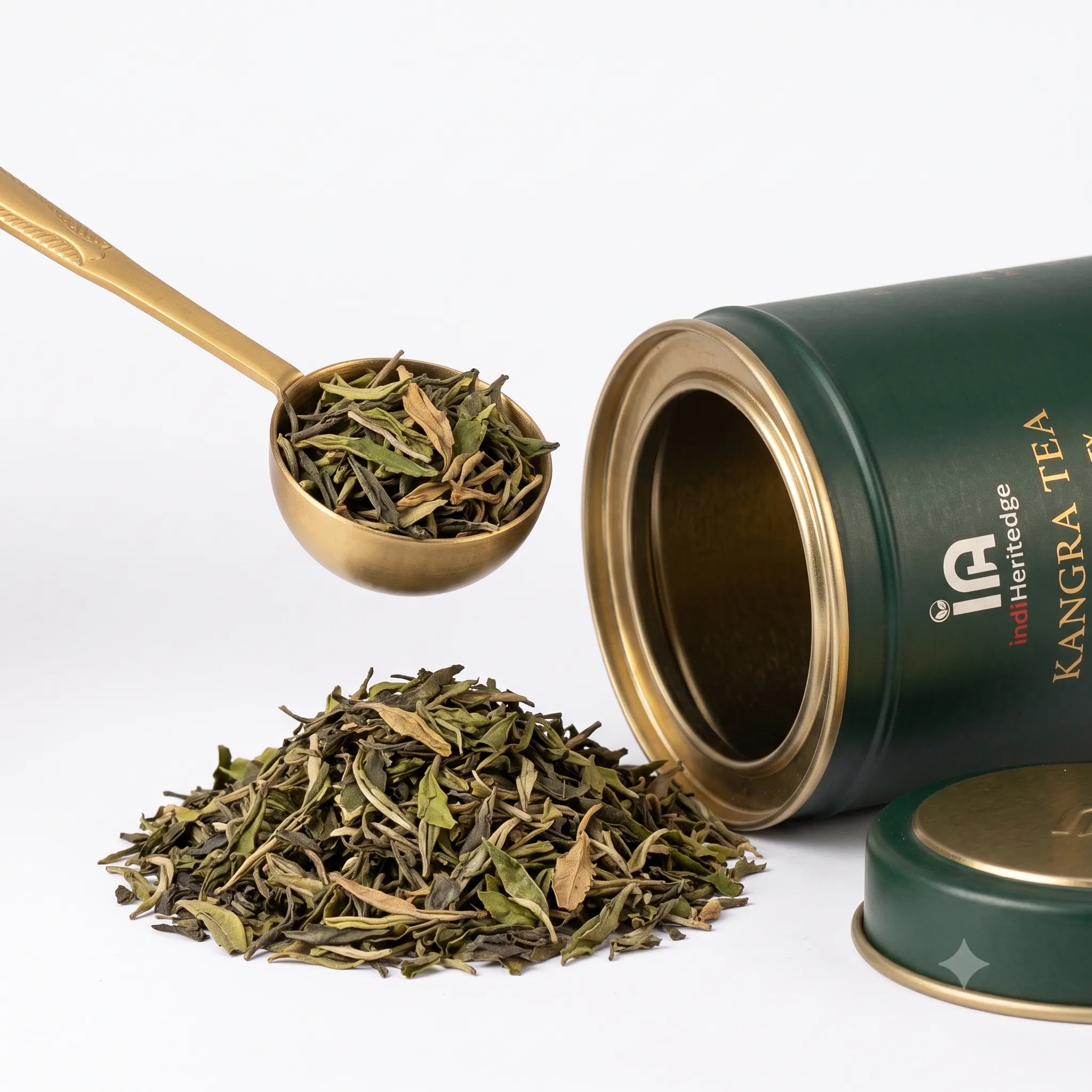
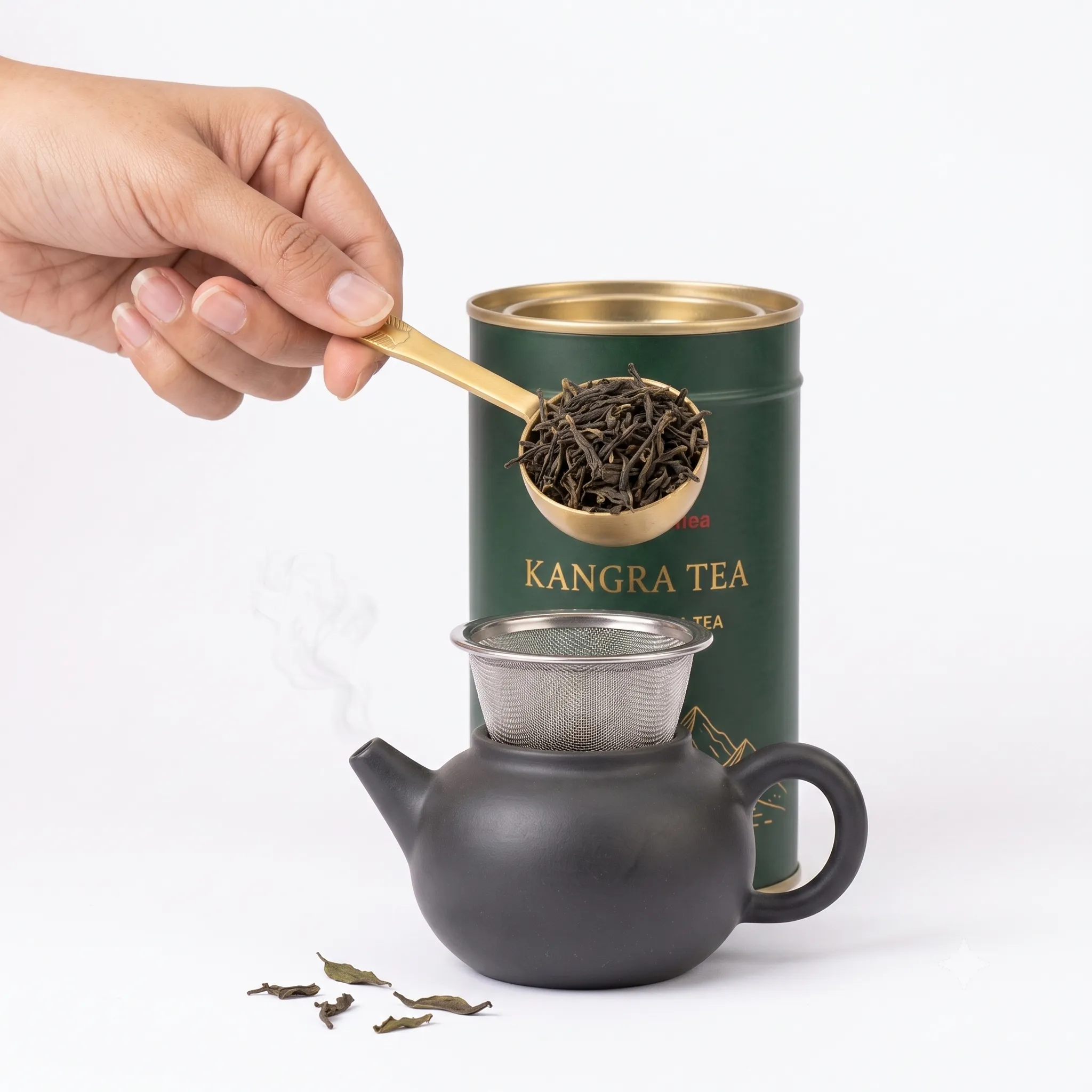
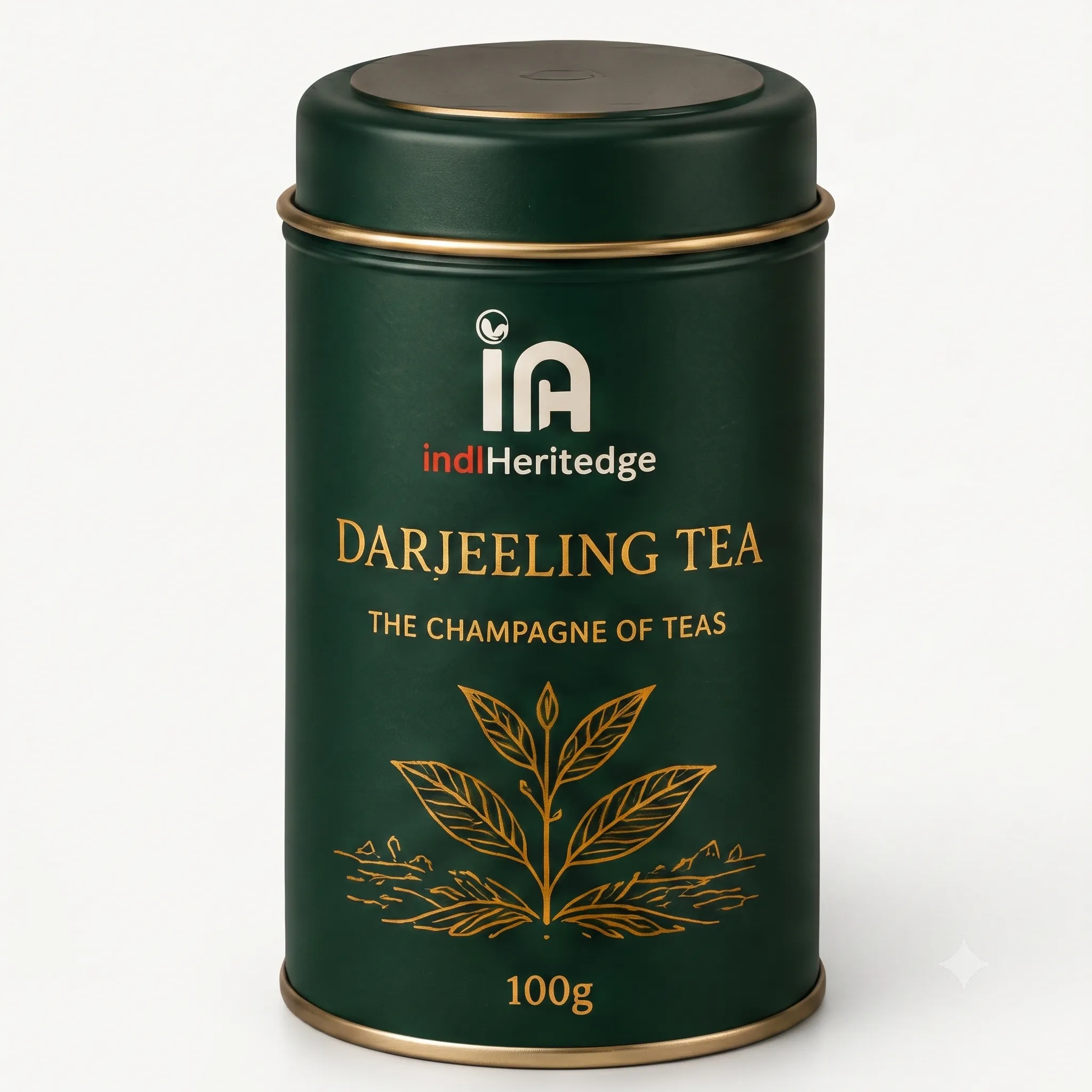
Kangra Tea is an esteemed tea variety grown primarily in the Kangra Valley and neighboring hill tracts of Mandi and Chamba in Himachal Pradesh. Cultivated on the southern slopes of the snow-clad Dhauladhar ranges at elevations of 900–1400 metres above sea level, it is produced largely by smallholder tea growers. The distinct terroir yields both black and green teas known for their characteristic liquor, color, and aroma.
What Makes It Unique:
Kangra Tea derives its distinctive "Kangra flavor" and liquor from century-old, seed-raised Camellia sinensis var. sinensis bushes grown in the unique microclimate of the Dhauladhar foothills. Scientifically recognized for superior health benefits, it features high Epigallocatechin gallate (EGCG) levels (6.85% to 9.11%), up to 13% catechins, and 3% caffeine paired with calming amino acids like theanine. The plants display natural pest resistance, resulting in residue-free production.
Production Process:
Bushes are propagated from seed stock on naturally drained hill slopes with minimal chemical interventions. Both black and green teas are produced: black tea processing involves controlled withering, rolling, fermentation for 4–6 hours, re-rolling, firing/drying, and grading; green tea follows traditional pan-scorching, rolling, cooking, and grading. Finished products are categorized into established grades, from whole-leaf SFTGFOP black teas to Young Hyson and Gun Powder green teas.
Historical Background:
Tea cultivation began in 1849 when Dr. Jameson identified the Kangra Valley's potential, leading to government tea gardens in 1850–1852 and the first commercial estate—Hailey Nagar Tea Estate at Holta—in 1852. The industry expanded rapidly, and between 1886 and 1895, Kangra Tea earned gold and silver medals in London and Amsterdam. Despite setbacks from the 1905 earthquake, the region rebuilt its prominence, historically exporting large volumes of green tea to Afghanistan and Iran.